
MLB Wagering
Online Baseball Betting in the UK — The Data-Led Guide for 2026
By MLB Wagering Analyst
 Available in US
Seven years ago, when I first started tracking MLB lines at UKGC-licensed sportsbooks, the average British punter looked at me like I’d suggested betting on competitive cheese-rolling. Football was king, horse racing was tradition, and baseball was that American sport with the funny trousers. Fast-forward to 2026, and online baseball betting has quietly become one of the sharpest value propositions in the UK wagering landscape — a niche where thinner margins, richer data and a 162-game season create structural advantages that football and racing simply cannot match.
The numbers back up what I’ve been seeing on the ground. The UK holds the third-largest gambling market on the planet, valued at $27 billion, and the appetite for sports beyond the Premier League is accelerating. Andrew Rhodes, CEO of the UK Gambling Commission, acknowledged the shift at ICE 2025 in Barcelona, noting that operators are reporting a “widening out of the sports offering” with US-based sports — including baseball — growing in popularity among British bettors. Meanwhile, across the Atlantic, MLB accounts for roughly 15% of the total sports betting handle in the United States, a share that translates into deep liquidity, competitive odds and a volume of available markets that UK-facing operators are increasingly eager to replicate.
This guide is built for the data-literate UK bettor who wants more than a list of bookmakers and a welcome bonus. I’ve structured it around the questions that actually matter: how MLB betting mechanics differ from what you already know, where the margin advantages sit, what the 2025 UKGC reforms mean for your account, and how to build a repeatable approach across a season that runs from late March through October. Every claim is backed by sourced figures — no vague promises, no affiliate hype.
Whether you’ve placed a thousand moneyline wagers or you’re opening your first baseball market tonight, the sections ahead are designed to give you a genuine analytical edge. This is everything I wish someone had laid out for me when I first started tracking MLB lines from a flat in East London.
Third-largest gambling market
The UK’s $27 billion market is a global heavyweight, and baseball betting is riding the wave of diversification away from football-only portfolios.
162 games per team, per season
MLB’s marathon schedule creates far more betting opportunities — and far more data points — than any European football league.
Margins as low as 2%
MLB moneyline markets on a dime line carry roughly 2% bookmaker margin, among the lowest in professional sports betting.
10% of UK adults bet on sport online
A substantial and growing pool of bettors, many of whom are actively looking beyond football for better value.
UKGC reforms reshaped the landscape in 2025
New affordability thresholds, a statutory levy and tighter compliance rules have changed how every UK bettor interacts with their sportsbook.
MLB’s international audience grew 18% in 2024
The sport is no longer a US-only affair — and UK sportsbook coverage is expanding to match.
Table of Contents
- The Numbers That Shape Every Decision in This Guide
- Why MLB Is Growing in the UK — and Why Bettors Should Care
- How MLB Betting Works — Core Markets for UK Bettors
- MLB Betting Toolkit
- Choosing a Sportsbook for Baseball — Criteria That Actually Matter
- UK Odds Formats and MLB Lines — Reading What the Sportsbook Shows You
- Strategy Fundamentals — Bankroll, Value and the Long Season
- Live Betting on MLB From the UK — Why Baseball’s Rhythm Suits In-Play
- UKGC Regulations Snapshot — What the 2025 Reforms Mean for Your Baseball Betting
- The UK in the Global Betting Landscape — Why the American Boom Benefits British Bettors
- Frequently Asked Questions About Online Baseball Betting
The Numbers That Shape Every Decision in This Guide
- MLB moneyline margins sit around 2% on a dime line — among the lowest in professional sports and the primary reason baseball rewards patient, data-driven bettors over casual punters.
- The UK is the world’s third-largest gambling market ($27 billion), and MLB’s international audience grew 18% in 2024, driving UK sportsbooks to expand baseball coverage with deeper markets and sharper pricing.
- Since February 2025, UKGC affordability checks trigger at just GBP150 in net deposits over 30 days — a threshold that active baseball bettors will hit regularly, making documentation readiness essential.
- A 162-game MLB season demands bankroll discipline that football’s 38-match schedule never tests: 1-3% per wager, seasonal budgeting, and the mental framework to survive inevitable losing streaks.
- Over 60% of European online sports bets are placed in-play, and baseball’s stop-start rhythm creates cleaner live-betting windows than any continuous-play sport.
Why MLB Is Growing in the UK — and Why Bettors Should Care
I remember watching the first London Series in 2019 from a pub in Shoreditch, surrounded by people who kept asking why the pitcher was allowed to bat. By 2024, the same pub had a dedicated MLB screen on game nights. That shift didn’t happen by accident — it was engineered through a combination of live events, streaming infrastructure and a younger demographic that consumes sport differently from their parents.
The 2024 MLB London Series — Mets vs Phillies at London Stadium — drew 108,956 spectators across two days, turning a temporary baseball diamond into one of the hottest tickets in the British sporting calendar.

Those attendance figures are impressive on their own, but the ripple effects tell a bigger story. After the 2023 London Series, MLB merchandise sales in the UK jumped 43%, and the league’s UK social media following surged by 133%. That’s not casual curiosity — it’s the kind of sustained engagement that drives downstream betting activity. When fans start buying jerseys and following players on social media, the step to opening a sportsbook market is remarkably short.
The growth extends well beyond London. MLB’s international audience rose 18% in 2024, with Asia up 32% and Latin America up 16%. For UK bettors, that international expansion matters because it pushes operators to offer deeper MLB coverage. More eyeballs globally means more liquidity in the betting markets, sharper lines and a wider menu of prop bets and in-play options that simply weren’t available at UK sportsbooks five years ago.
Total MLB attendance hit 71.3 million in 2024, an 11% increase since 2022 and the highest figure in seven years. The average age of ticket buyers dropped from 51 to 46 over the past five years — a meaningful demographic shift that signals the sport is attracting a generation more comfortable with data, apps and wagering platforms. MLB Commissioner Robert D. Manfred Jr. put it plainly: “The increased enthusiasm baseball fans of all ages have shown the last two seasons is evident in all of the ways we track fan engagement.”
For the UK betting market specifically, this convergence of live events, digital engagement and a younger audience creates a feedback loop. More UK fans mean more demand for MLB markets at British sportsbooks. More markets mean tighter odds and better coverage. Tighter odds mean better value for anyone willing to do the analytical work — which, if you’re reading this guide, is exactly where you sit.
The trajectory is clear. MLB is no longer a fringe curiosity for British bettors. It’s an expanding market with structural characteristics — low margins, rich data, high game volume — that reward the kind of disciplined, data-driven approach that this guide is built around. The question isn’t whether baseball betting in the UK will keep growing. It’s whether you’ll be positioned to take advantage of it when it does.
How MLB Betting Works — Core Markets for UK Bettors
The first time I placed an MLB bet from a UK sportsbook, I stared at the screen for a solid minute trying to figure out why the odds looked nothing like a football accumulator. Baseball has its own language, its own logic, and its own set of market types that reward a different kind of thinking. If you’ve spent years betting on Premier League or Champions League matches, some of this will feel familiar — but the differences are where the value hides.
Three markets form the backbone of MLB wagering. Master these, and you have the foundation for everything else — from props to parlays to live bets.
Moneyline — the simplest MLB bet. You pick which team wins the game outright, no spread involved. Because baseball is a low-scoring sport where outcomes are tightly contested, moneyline pricing tends to be closer than in football or basketball, which makes it a natural starting point for UK bettors.
Run line — baseball’s version of the spread, almost always set at -1.5 for the favourite and +1.5 for the underdog. Unlike football’s Asian handicap, this line rarely moves. The favourite must win by two or more runs; the underdog can lose by one and still cover. Here’s the catch: roughly 30% of all MLB games are decided by a single run, which means the run line is riskier than it first appears. That one-run margin is the razor’s edge where bankrolls get tested.
Totals (over/under) — a wager on the combined runs scored by both teams. The sportsbook sets a number — typically between 7 and 10 for an MLB game — and you bet whether the actual total lands over or under. Pitching matchups, ballpark dimensions and weather conditions all influence where this number sits, making totals the most research-intensive of the three core markets.
Parlay (accumulator) — multiple selections combined into a single bet, where every leg must win for the wager to pay out. UK bettors know this as an acca. The maths works the same way in baseball, but the margin stacking effect is more forgiving because MLB’s base margins are so thin.
Moneyline
Pick the winner. Closest odds of any major sport. Best for bettors who trust their read on starting pitcher matchups and want clean, low-margin exposure.
Run Line
Favourite at -1.5, underdog at +1.5. Higher payout on the favourite side, but 30% of games end with a one-run margin. A calculated risk, not a casual one.
Totals
Over or under the combined runs. Demands research into pitching, park factors and weather. The market where preparation gives you the clearest informational edge.
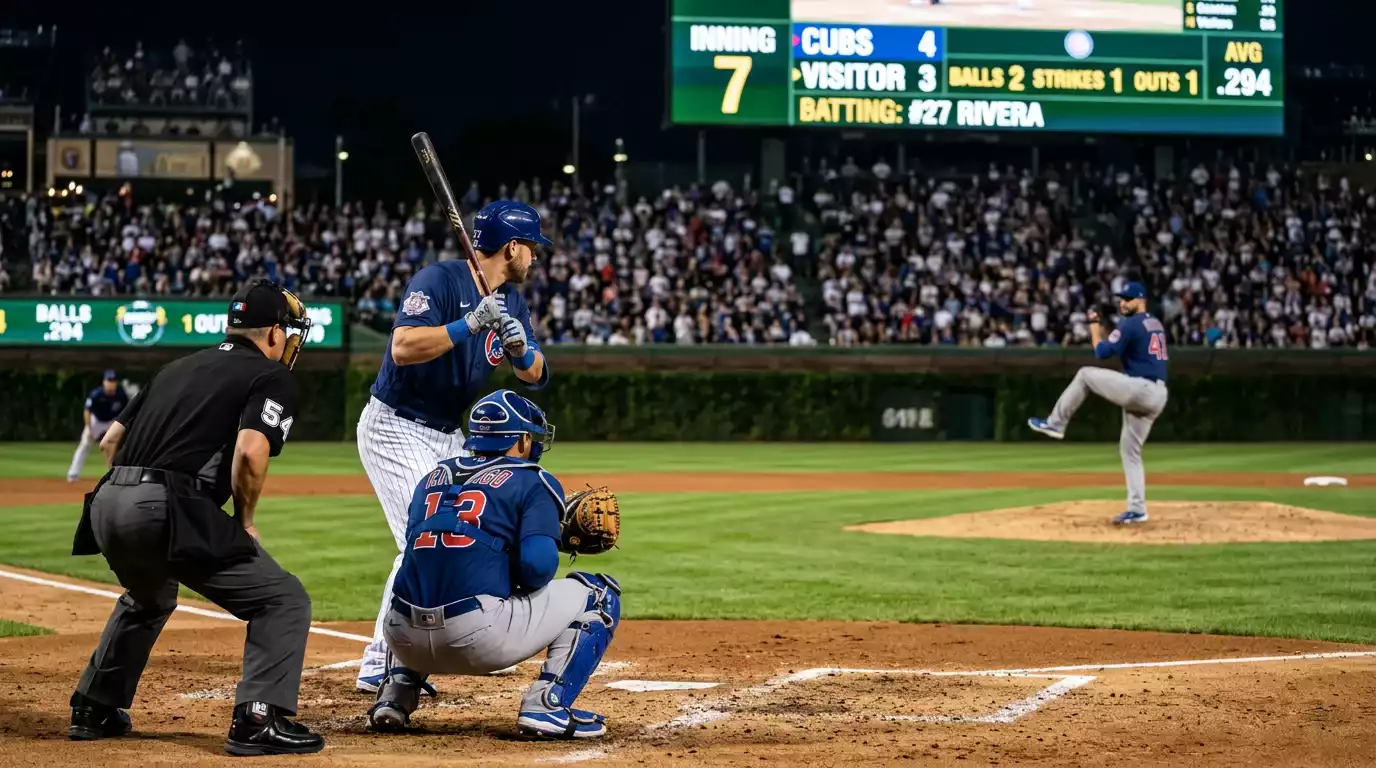
What makes MLB betting structurally different from football is the margin. On a standard “dime line” — the industry term for a 10-cent gap between the favourite and underdog moneyline — the bookmaker’s margin sits around 2%. Compare that to the 5-8% you’ll routinely see on Premier League match odds or the 10%+ that some operators bake into exotic football markets. That 2% margin is one of the lowest in professional sports betting, and it’s the single biggest reason serious value bettors gravitate toward baseball.
MLB Toolkit
MLB Betting Toolkit
Baseball’s edge is in the margins. Measure how sharp a line really is, weigh the run line against the moneyline, and stake to survive 162 games.
A true “dime line” carries around a 2% margin — the lowest in pro sport. Enter both moneylines (American, decimal or fractional) to see how much the book is really charging, and the margin-free fair prices.
“Fair” prices have the margin removed — bet only when your own read beats those numbers. Over a 162-game season a 2% line versus a 5% line is the difference between a profit and the house grinding you down.
The run line is almost always ±1.5. The favourite must win by 2+; the underdog covers a 1-run loss. But roughly 30% of MLB games are decided by a single run — so that razor’s edge matters. Compare the two prices for your side.
The “one-run swing” estimates the share of this team’s games the run line flips versus the moneyline — drawn from the prices you entered. With ~30% of all games decided by a single run, it’s the number that decides whether the extra payout is worth it.
Even the best teams lose 40% of the time, so a profitable bettor still hits long cold runs. Size your stake to survive them — and see just how routine a losing streak really is.
Streak odds assume independent bets at your win rate — a planning guide, not a prediction. The point: long losing runs are normal across a season, so build for them rather than panicking when one arrives.
American to Decimal — a quick snapshot
Suppose the favourite is listed at -130 (American). To convert: 1 + (130 / 100) = 2.30 decimal odds. If the underdog is +120: 1 + (120 / 100) = 2.20 decimal odds. At a UK sportsbook displaying decimal, you’ll see 2.30 and 2.20 — the dime line in action, with only a thin slice for the house.
The conversion between American and decimal odds trips up a lot of UK bettors early on, because MLB lines originate in the US and often arrive at British sportsbooks in American format before being automatically converted. Understanding both formats — even at a glance — removes a layer of friction that most casual bettors never bother to address. And in a sport where margins are measured in pennies, removing friction is removing cost.
Choosing a Sportsbook for Baseball — Criteria That Actually Matter
Last summer, a friend asked me which sportsbook he should use for MLB betting, and I told him the answer depended entirely on which question he was really asking. Did he want the flashiest welcome bonus? The widest range of prop markets? The tightest moneyline margins? The fastest live-betting interface? These are four different questions with four different answers, and the operator with the biggest advertising budget rarely wins on the metrics that matter most for baseball.
The UK has 914 registered gambling companies and over 8,000 licensed premises. That’s a crowded marketplace, and the noise-to-signal ratio is brutal. One major operator alone captures 37.83% of paid search clicks in UK sports betting — a dominance built on marketing spend, not necessarily on the quality of their MLB offering. The gap between what’s promoted and what’s actually useful for baseball bettors is where your decision-making needs to live.
UKGC licence — non-negotiable. Every sportsbook you use for baseball betting in the UK must hold a valid licence from the UK Gambling Commission. This isn’t a suggestion or a best-practice tip — it’s a legal requirement. An unlicensed operator means no regulatory protection, no dispute resolution and no guarantee that your funds are segregated. Check the UKGC register before depositing a single pound.
Beyond the licence, here are the criteria I use when evaluating a sportsbook for MLB wagering specifically. These aren’t generic — they’re weighted toward what matters for a sport with 2,430 regular-season games, low margins and a heavy reliance on live data.
What to look for
- Dime-line or near-dime-line pricing on MLB moneylines — this is the single biggest cost factor over a long season
- Depth of MLB markets beyond moneyline, run line and totals: F5 lines, pitcher props, same-game parlays
- Reliable in-play coverage with fast odds updates during pitching changes and between innings
- Clean mobile interface where baseball markets are easy to find without drilling through three menus
- Transparent withdrawal processing — ideally under 24 hours for e-wallets
What to avoid
- Operators where MLB is buried under a “US Sports” tab with two or three markets per game
- Wide moneyline spreads (20-cent lines or worse) that erode your edge over hundreds of bets
- Sportsbooks that restrict or limit accounts after a short run of winning baseball wagers
- Welcome bonuses with wagering requirements that force you into high-margin markets to clear the bonus
- Platforms with no live-streaming or live-data integration for MLB games
I track six specific criteria when comparing operators for baseball: MLB market depth, moneyline margin, live-betting quality, mobile experience, deposit and withdrawal speed, and welcome offer terms. No single sportsbook leads on all six — the one with the sharpest odds might have a clunky app, and the one with the best mobile experience might offer only basic MLB markets. The trick is to weight the criteria by what matters to your approach. If you’re a moneyline grinder placing 10 bets a week, margin is everything. If you’re a props specialist, market depth trumps margin.
| Criterion | Why it matters for MLB | What “good” looks like |
|---|---|---|
| MLB market depth | More markets = more angles. F5, props, alt run lines expand your toolkit. | 15+ markets per regular-season game |
| Moneyline margin | Over 162 games, even 1% margin difference compounds significantly. | Dime line or close (2-3% total overround) |
| Live-betting quality | MLB’s natural pauses create ideal in-play windows — but only if the platform keeps up. | Odds update within seconds of game events |
| Mobile experience | Late-night MLB sessions happen on your phone, not your desktop. | Baseball markets accessible in two taps from home screen |
| Withdrawal speed | Cashflow management matters in a sport where you might bet daily. | Under 24 hours for e-wallets, under 72 hours for bank transfer |

The detailed comparison of UK baseball betting sites breaks down how current operators perform against these criteria. For now, the principle is simple: choose based on data, not marketing. The bookmaker spending the most on Google ads is optimising for clicks, not for your MLB edge.
UK Odds Formats and MLB Lines — Reading What the Sportsbook Shows You
A colleague once told me he avoided MLB entirely because “the odds don’t make any sense.” He wasn’t wrong about the confusion — he was just wrong about the cause. MLB betting lines are born in American format, because that’s where the market originates. By the time those lines reach your UK sportsbook, they may have been auto-converted to decimal or fractional, but the pricing logic underneath is still American. Understanding that origin — even if you never bet in American format yourself — makes you a sharper reader of every line you see.
Three odds formats exist in UK baseball betting. Here’s how the same line looks across all three.
The same MLB line in three formats
| Team | American | Decimal | Fractional |
|---|---|---|---|
| Favourite | -150 | 1.67 | 2/3 |
| Underdog | +140 | 2.40 | 7/5 |
In American format, the minus sign tells you how much you need to stake to win 100 units, while the plus sign tells you how much you win on a 100-unit stake. Most UK bettors find this counterintuitive at first, because we’re trained to think in terms of “what do I get back per pound staked” — which is exactly what decimal odds provide. A favourite at -150 American becomes 1.67 decimal: for every pound you stake, you receive 1.67 back (including your original stake). The underdog at +140 becomes 2.40 decimal: a pound returns 2.40.
Fractional odds — the traditional UK format — express the same information as a ratio of profit to stake. The favourite at 2/3 means you profit two pounds for every three pounds staked. The underdog at 7/5 means seven pounds profit for every five staked. Most experienced bettors I know have largely moved to decimal for MLB, because the maths is cleaner and comparisons between lines are faster.
Step-by-step: converting American to decimal
For negative American odds (favourites): Take the absolute value of the American odds. Divide 100 by that number. Add 1. Example: -130 becomes 100 / 130 = 0.769, then 0.769 + 1 = 1.77 decimal.
For positive American odds (underdogs): Divide the American odds by 100. Add 1. Example: +120 becomes 120 / 100 = 1.20, then 1.20 + 1 = 2.20 decimal.
Quick mental shortcut: For a -150 line, think “I’m laying 150 to win 100” — that’s a total return of 250 on a 150 stake, or 250/150 = 1.67 decimal. For a +140 line, think “I stake 100 and get 240 back” — 240/100 = 2.40 decimal.
The reason this matters beyond arithmetic is that American odds reveal the market structure more transparently than decimal ever can. When you see -130/+120, you immediately know the gap between those two numbers (the “line spread”) is 10 cents — a dime line. That tells you the bookmaker’s margin at a glance. In decimal, the same pair (1.77 and 2.20) requires calculation to extract the margin. Once you learn to read the American format natively, you can assess the cost of a bet in under a second.
The comprehensive odds breakdown covers implied probability, margin calculation from any format, and the specific situations where one format gives you a faster read than the others. For daily use, I recommend setting your sportsbook to decimal for staking calculations, but keeping an American odds column visible whenever possible — it’s the native language of the lines you’re betting on, and fluency in that language is a quiet edge.
Strategy Fundamentals — Bankroll, Value and the Long Season
In my second year of serious MLB betting, I had a 12-game losing streak in June that nearly made me abandon baseball entirely. My models were sound, my line reads were correct more often than not — but I hadn’t built a bankroll structure that could absorb the variance of a 162-game season. That experience taught me the most important lesson in baseball wagering: strategy isn’t about picking winners. It’s about surviving the stretches where correct decisions produce losing results.
Roughly 10% of UK adults participate in online sports betting, and my strong suspicion is that the vast majority treat each wager as an isolated event. In football, where a team plays 38 league matches, that approach might be sustainable. In baseball, where the same team plays 162 times and the best sides in history still lose 40% of their games, isolated thinking is a guaranteed way to chase losses and blow through your bankroll by July.
Three principles anchor every sound MLB betting strategy. These aren’t theoretical — they’re the distilled product of years spent tracking thousands of wagers across multiple seasons.
Bankroll discipline first. Allocate a fixed seasonal bankroll and stake 1-3% per wager. A 100-unit bankroll with 2-unit average stakes gives you 50 bets of breathing room before you’re in trouble — and in a sport with this much variance, you’ll need every unit of that buffer. Monthly sub-budgets help prevent the temptation to accelerate stakes after a cold stretch.
Value over volume. The 2025 US sports betting revenue hit a record $16.96 billion, a 22.8% year-on-year increase. That growth has expanded the menu of MLB lines available to UK bettors, but more options doesn’t mean more bets. Bill Miller, President of the American Gaming Association, framed the industry’s expansion as proof that “sports betting belongs under state and tribal regulation” — the point being that the market is maturing, not that everyone should be wagering more. Be selective. A day with no edge is a day with no bets.
Think in seasons, not in games. Your win rate over 20 bets is noise. Your win rate over 500 bets is signal. Structure your tracking and your expectations around monthly and seasonal benchmarks, not nightly results. The variance mathematics of baseball mean that even a genuinely profitable bettor will have multi-week downswings. The strategy is designed to outlast them.

The deep dive into long-season baseball betting strategy covers bankroll sizing formulas, closing line value analysis and a calendar-based framework for adjusting your approach through spring training, the All-Star break and the September roster expansion. What I want to establish here is the mindset: baseball rewards patience, punishes impulsivity, and offers some of the thinnest margins in professional sport to anyone willing to do the work consistently.
If you’re coming from football betting, the single biggest mental adjustment is accepting that losing five in a row is routine, not catastrophic. Build your bankroll to handle it, track your results with discipline, and let the long season do the compounding for you.
Bankroll discipline keeps you in the game over 162 days. But within each of those days, the sharpest edges often emerge after the first pitch — in the live-betting markets that baseball’s stop-start rhythm was practically designed for.
Live Betting on MLB From the UK — Why Baseball’s Rhythm Suits In-Play
Most people think of live betting as a football product — and in terms of sheer volume, they’re right. In-play wagers account for over 60% of all online football bets placed in Europe. But here’s what took me a couple of seasons to appreciate: baseball is structurally better suited to live betting than football will ever be. Every pitch creates a discrete event. Every half-inning is a natural pause. Every pitching change reshuffles the probabilities in ways that the pre-match line couldn’t anticipate. Football flows; baseball stops, recalculates, and starts again.
Over 60% of all online sports bets on football in Europe are placed in-play — and MLB’s natural pauses between pitches, innings and pitching changes create even more defined entry windows for live wagering.
The practical appeal for UK bettors is straightforward. MLB games unfold over roughly three hours, with built-in breaks every half-inning and significant line movement whenever a manager goes to the bullpen. Those moments — a starter pulled in the fifth, a reliever with a shaky ERA brought in for a high-leverage situation — are the live-betting equivalent of a penalty being awarded in football. The odds shift rapidly, and the bettor with preparation and composure has a window to act before the market corrects.
What you’ll find at most UK sportsbooks for MLB in-play includes live moneyline, live totals, next-inning winner, next run and — increasingly — live pitcher prop markets. The depth varies by operator, which is why live-betting quality is one of the six criteria I use when evaluating sportsbooks. An operator that updates odds within seconds of a pitching change is a fundamentally different product from one that lags by 30 seconds or suspends markets entirely.
Mobile matters here more than in any other context. A full 78% of all online sports bets globally are placed from mobile devices, and that figure is almost certainly higher for late-night MLB sessions when UK bettors are watching from bed, not sitting at a desk. The quality of the mobile live-betting experience — speed, clarity, one-tap bet placement — can be the difference between catching a value window and watching it close.
UK time zones and MLB scheduling. East Coast games typically start between 23:00 and 01:00 BST (22:00-00:00 GMT). West Coast games push that to 02:00-03:00 BST. If you’re planning to bet in-play on West Coast matchups, you’re committing to a late night — or an early morning alarm. Many experienced UK baseball bettors I know focus their live work on the earlier East Coast slate and handle the West Coast games with pre-match wagers.

The full breakdown of MLB live betting strategy for UK bettors covers specific timing windows, the mechanics of odds movement around pitching changes, and a framework for maintaining discipline during those 2 AM sessions. The summary version: baseball’s stop-start format creates more defined, more predictable live-betting opportunities than any continuous-play sport. If you’ve been doing your in-play work exclusively in football, MLB is worth a serious look.
UKGC Regulations Snapshot — What the 2025 Reforms Mean for Your Baseball Betting
In February 2025, I logged into one of my sportsbook accounts and found a new notification asking me to verify my income. I’d been a customer for four years, deposited well within what I considered modest limits, and suddenly I was being asked to upload payslips. That moment — replicated across tens of thousands of UK betting accounts — was the direct consequence of the most significant regulatory overhaul the British gambling industry has seen in a decade.
The headline number: UK gambling’s total gross gaming yield reached GBP16.8 billion in the 2024-25 financial year, the highest figure on record. That scale is precisely why the Gambling Commission moved to tighten controls. The argument, from the regulator’s perspective, is that a market this large needs proportionally robust consumer protections.
Affordability checks — the new thresholds. Since February 2025, the trigger point for enhanced financial vulnerability checks dropped from GBP500 to GBP150 in net deposits over a rolling 30-day period. Once you cross that threshold, your operator may request proof of income or affordability before you can continue depositing. The checks are designed to identify customers who may be spending beyond their means, but they also introduce friction for bettors who are well within their budget but simply active across multiple accounts or sports.
The affordability checks have a measurable impact on behaviour. Research conducted by PwC found that 10-15% of players who encounter a Stage 2 check — the enhanced review requiring documentation — abandon the process entirely. Whether those individuals are genuinely at risk or simply frustrated by the administrative burden is an open question. The UKGC’s own modelling suggests that gross deposit limits combined with affordability checks could reduce indicators of gambling harm by 15-20% over two years. The regulatory bet, in other words, is that short-term friction produces long-term protection.
Alongside the affordability changes, a statutory levy on operators came into effect in April 2025, scaled between 0.1% and 1.1% of gross gaming yield depending on operator size and type. This levy funds research, education and treatment for gambling harm. Andrew Rhodes, the UKGC’s CEO, has framed the evolving relationship as one of mutual benefit: “As compliance gets better, we can continue shaping more positive partnerships with the industry — to drive improvement, to lift standards, to be sure that the rules are upheld with much greater quality and transparency.”
For baseball bettors specifically, these reforms have a few practical implications worth noting. First, the GBP150 net-deposit threshold is calculated per operator, not across your entire betting portfolio — so spreading activity across three sportsbooks doesn’t triple your limit, but it does mean each account has its own threshold. Second, the statutory levy increases operator costs, which may gradually compress the generosity of welcome bonuses and promotional offers over time, even if the impact on odds margins is likely minimal. Third, the broader regulatory direction — tighter compliance, more data sharing between operators and the Commission, stronger enforcement against unlicensed sites — makes the choice of a UKGC-licensed sportsbook not just legally necessary but practically essential.
The detailed analysis of UKGC baseball betting regulations covers the full scope of the 2025 reforms, including slot stake limits, their precedent-setting implications for sports bettors, and the enforcement actions the Commission has taken against non-compliant operators. The short version for anyone starting out: know your thresholds, keep your documentation ready, and don’t view regulatory compliance as an obstacle — view it as the cost of operating in a market that takes consumer protection seriously.
The UK in the Global Betting Landscape — Why the American Boom Benefits British Bettors
When someone asks me why UK sportsbooks suddenly care about baseball, I point them at a single number: $16.96 billion. That’s the total sports betting revenue generated in the United States in 2025, a 22.8% increase on the prior year and a figure that continues to climb as new states legalise. The American market isn’t just growing — it’s reshaping the global betting infrastructure in ways that directly benefit anyone placing MLB wagers from this side of the Atlantic.
Global gambling revenue surpassed $643 billion in 2025, with the online segment alone accounting for $121 billion — roughly one-fifth of the total. The sports betting slice within that: $32.86 billion globally, projected to grow at 10.8% annually through 2034.
Here’s how the American expansion translates into a tangible advantage for UK bettors. As the US market matures and more states come online, the volume of money flowing through MLB markets increases. Higher volume means tighter spreads, faster price discovery, and more competitive odds across the global supply chain. The lines that reach your UK sportsbook are priced off that American liquidity pool. When the pool deepens, the pricing improves — even for a bettor in Manchester who has never set foot in a Las Vegas sportsbook.
The supply chain works in the other direction too. UK-licensed operators with global reach — the kind that hold both UKGC and US state licences — are investing heavily in their MLB product because it now generates revenue on both sides of the Atlantic. That investment translates into deeper market coverage, more prop options, better live-betting infrastructure and more sophisticated data integration. Five years ago, a UK sportsbook might have offered moneyline, run line and totals for MLB. Today, the same operator might offer 25+ markets per game, including F5 lines, pitcher props, inning-by-inning totals and same-game parlays — all driven by the commercial imperative of competing in the world’s fastest-growing sports betting market.
The global context also provides a useful calibration for expectations. The UK’s total sports betting gross gaming yield sits around GBP2.48 billion annually — substantial, but a fraction of the American total. Baseball’s share within that UK figure is small but growing, which means the market is still in its price-discovery phase. Inefficiencies that have been competed away in mature markets (football, horse racing) still exist in UK baseball betting lines. For a data-led bettor, that combination of improving infrastructure and lingering inefficiency is close to ideal.
The structural tailwinds are clear: a booming American market feeds better MLB lines to UK sportsbooks, while the relative immaturity of baseball betting in Britain preserves the kind of pricing gaps that disciplined bettors exploit. What remains is the practical detail — the questions that come up most often when someone makes the leap from reading about baseball betting to actually doing it.
Frequently Asked Questions About Online Baseball Betting
Is baseball betting legal in the UK?
Yes. Betting on baseball — including MLB, NPB and any other professional baseball league — is fully legal in the UK, provided you use a sportsbook licensed by the UK Gambling Commission. The UKGC regulates all forms of online sports betting available to UK residents, and baseball falls squarely within the scope of permitted wagering activity. There is no separate licence required for baseball specifically; any UKGC-licensed sportsbook that chooses to offer MLB markets does so under its existing sports betting licence. What is not legal is using an unlicensed, offshore operator — regardless of the sport. The UKGC actively enforces against unlicensed sites targeting UK consumers, and in the period from April 2024 to January 2025 alone, the Commission issued over 770 cease-and-desist notices and removed 64,000 URLs. Always verify your operator’s licence status on the UKGC public register before opening an account.
What are the main types of MLB bets?
The three core MLB markets are the moneyline (picking the outright winner), the run line (a -1.5 spread applied to the favourite, functioning similarly to a handicap in football) and totals (betting on whether the combined runs scored by both teams will land over or under a set number). Beyond these, UK sportsbooks increasingly offer prop bets (individual player performance markets, such as pitcher strikeouts or batter hits), F5 lines (first-five-innings versions of the moneyline and totals, isolating the starting pitcher matchup), futures (season-long markets like World Series winner), and parlays (accumulators combining multiple selections). The moneyline is the most popular starting point for UK bettors new to baseball, because it carries the lowest bookmaker margin and requires no understanding of spreads or totals to get started.
How do American odds work for UK bettors?
American odds use a positive or negative number anchored to 100 units. A negative figure (e.g. -140) tells you how much you need to stake to win 100 units: at -140, you stake 140 to win 100. A positive figure (e.g. +130) tells you how much you win on a 100-unit stake: at +130, you win 130 on a 100 bet. To convert to decimal — the format most UK bettors prefer — divide 100 by the absolute value of negative odds and add 1 (so -140 becomes 1.71 decimal), or divide positive odds by 100 and add 1 (so +130 becomes 2.30 decimal). Most UK sportsbooks let you toggle between formats in your account settings, but understanding the American format gives you an instant read on the bookmaker’s margin, because the gap between the two numbers reveals the spread the operator is charging.
What time do MLB games start in UK time?
Most MLB games are scheduled around local evening times in the United States, which translates to late night and early morning in the UK. East Coast games (teams like the Yankees, Red Sox, Mets, Phillies) typically start between 23:00 and 01:00 BST. Central time-zone games (Cubs, Cardinals, Astros) push about an hour later. West Coast games (Dodgers, Giants, Mariners) can start as late as 02:10 or 03:00 BST. Sunday and weekday matinee games are the exception — these can start as early as 18:00-20:00 BST, making them far more accessible for UK bettors who don’t want to stay up past midnight. During the MLB London Series, games are scheduled for afternoon UK time, usually around 18:00 BST.
Can I bet on MLB games live from the UK?
Yes, and MLB is one of the best sports for live betting due to its discrete, pitch-by-pitch structure. Most major UKGC-licensed sportsbooks offer in-play markets for MLB games, including live moneyline, live totals, next-inning winner and, at some operators, live pitcher props. The quality and depth of live coverage varies — some sportsbooks update odds within seconds of each pitch, while others suspend markets during key moments. Baseball’s natural pauses between innings and during pitching changes create defined windows for in-play wagers that are often cleaner and more predictable than the continuous flow of a football match. If you plan to bet live on late-night West Coast games, a sportsbook with a strong mobile app and reliable live-data feed is essential.
What are the 2025 UKGC reforms and how do they affect betting accounts?
The 2025 UKGC reforms introduced three major changes. First, the financial vulnerability check threshold dropped from GBP500 to GBP150 in net deposits over a rolling 30-day period — meaning operators must now conduct enhanced checks on customers who deposit relatively modest amounts. Second, a statutory levy on operators (0.1% to 1.1% of gross gaming yield) came into effect in April 2025 to fund gambling harm research and treatment. Third, stake limits on online slots (GBP5 for over-25s, GBP1 for 18-24s) were introduced in May 2025 — these don’t apply directly to sports betting, but they set a regulatory precedent for potential future limits. For baseball bettors, the most immediate impact is the affordability check: if you deposit more than GBP150 net in a 30-day period at any single sportsbook, you may be asked to provide income verification before further deposits are accepted.
What is the best baseball betting site in the UK?
There is no single “best” site — the answer depends on what you prioritise. If moneyline margins are your primary concern, look for operators offering dime-line or near-dime-line pricing on MLB. If market depth matters more, prioritise sportsbooks with 15+ markets per game, including F5 lines, props and same-game parlays. If you plan to bet in-play, the speed and reliability of the live-betting interface should be your deciding factor. What I recommend is evaluating operators across six criteria — MLB market depth, moneyline margin, live-betting quality, mobile experience, withdrawal speed and welcome offer terms — and weighting those criteria according to your approach. The sportsbook with the biggest advertising budget is rarely the one with the sharpest MLB odds, and a flashy welcome bonus means nothing if the underlying product doesn’t serve your betting style.
Created by the ”Online Baseball Betting” editorial team.